Introduction
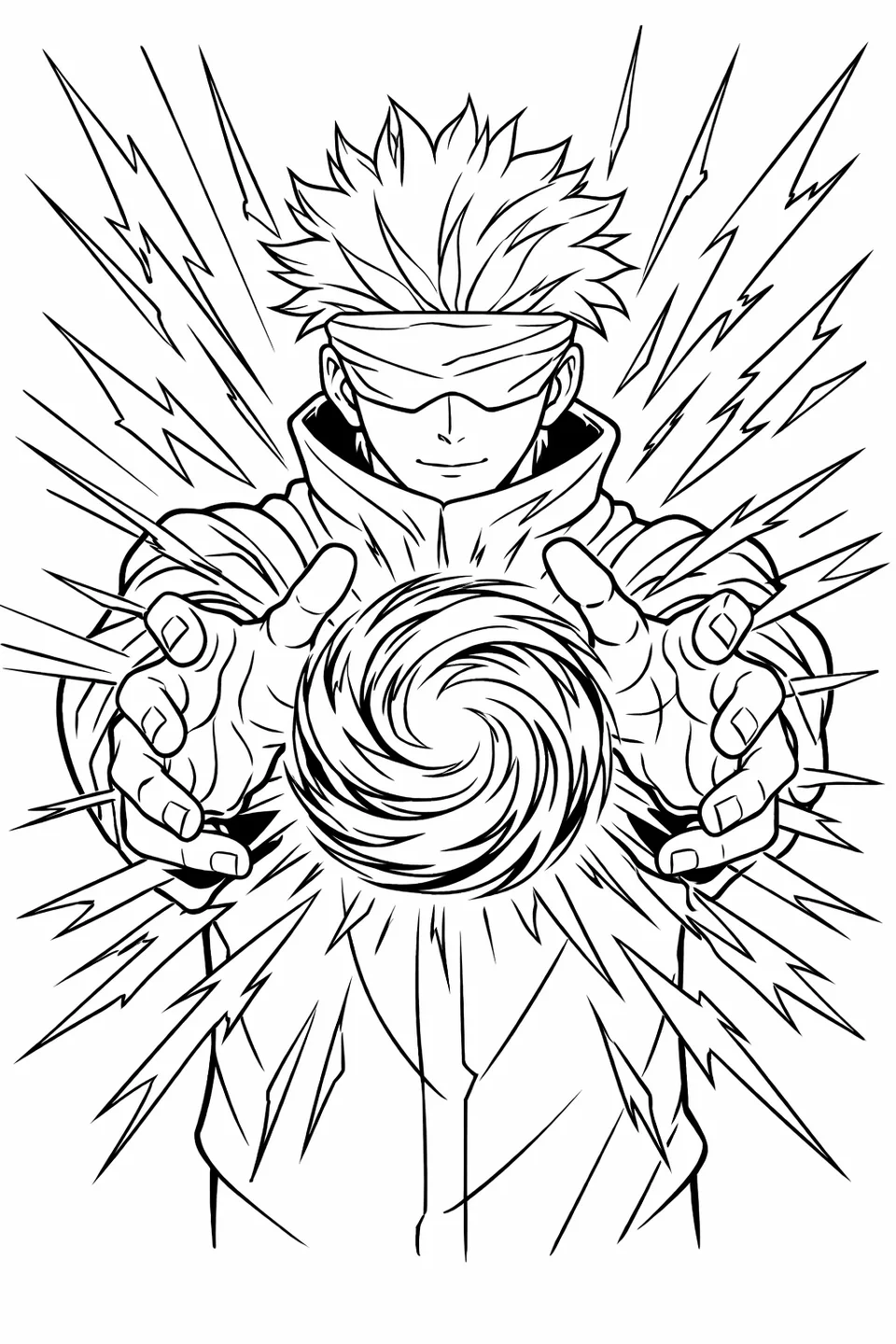
Coloring pages featuring characters like Gojo serve as high-interest visual stimuli that facilitate fine-motor development and sustained attention in early childhood learners. According to the National Association for the Education of Young Children (NAEYC), developmentally appropriate practice requires integrating children’s personal interests into academic tasks to increase engagement and promote cognitive persistence. Utilizing popular media characters in Coloring Pages provides a bridge between recreational interest and structured skill-building exercises, allowing educators to leverage high-engagement motifs to improve pencil grip, spatial awareness, and hand-eye coordination.
Curriculum Practice Snapshot:
- Core Focus: Utilizing high-interest character themes to incentivize fine-motor practice.
- Target Scope: Early elementary students requiring reinforcement of pencil control and stroke precision.
- Key Recommendation: Pair coloring tasks with Handwriting & Tracing sheets to maximize developmental impact.
Core Principles and Detailed Overview
The implementation of character-themed coloring exercises functions as a scaffolding tool for developing the intrinsic muscles of the hand necessary for later writing fluency. By focusing on specific boundaries and intricate line work, students practice the precision required for letter formation. Incorporating popular visual culture into Worksheets effectively lowers the affective filter, permitting learners to dedicate more mental energy to the physical act of controlling a writing implement. This approach transforms routine fine-motor drills into rewarding creative sessions, ensuring that students remain focused on the task of filling complex shapes with consistent pressure and stroke directionality.
Key Specifications and Breakdown
| Grade / Developmental Stage | Target Learning Skill | Instructional Strategy & Scaffolding |
|---|---|---|
| Early Preschool | Grip Strength | Use thick-lined, simple character outlines to reduce frustration. |
| Kindergarten | Spatial Boundaries | Require coloring within specific segments to build control. |
| Primary Grade | Pressure Modulation | Encourage shading techniques to develop varied pencil pressure. |
Foundational Motor Skills Principle — What Works Clearinghouse (IES) recommends that explicit instruction in fine-motor skills be integrated into daily routines to support emergent literacy and handwriting proficiency.
Step-by-Step Practical Application and Guidelines
Effective utilization of character-themed coloring requires a structured transition from free-form exploration to targeted skill practice. First, introduce the coloring sheet as a reward for completing a baseline Learning Activities session to reinforce positive work habits. Second, provide specific instructions regarding stroke direction, such as encouraging vertical or circular motions within the character’s clothing or accessories to mimic the movements required for cursive or print letter formation. Finally, assess the student’s ability to maintain edge-to-edge coverage, providing verbal feedback on grip adjustment and spatial planning to ensure continuous refinement of motor capabilities.
Common Challenges and How to Avoid Them
Over-reliance on high-interest themes can lead to superficial engagement if educators fail to set clear technical expectations for the coloring task. To prevent students from rushing through the activity, establish clear criteria for completion, such as requiring full saturation of colors or the use of specific patterns within the design. Additionally, ensure that the complexity of the printable matches the current developmental stage of the learner; overly intricate designs may discourage students with developing motor control, whereas overly simplistic designs may fail to challenge their growing precision. Regular monitoring and the provision of Teacher Resources that include varied difficulty levels will mitigate these common instructional hurdles.
💬 Frequently Asked Questions
Explore More Early Learning and Classroom Resources on Knowalla
Educators and parents seeking to diversify their instructional toolkit can find a vast array of high-quality, printable materials designed to support academic growth at Knowalla. Explore the comprehensive library of resources to find the perfect supplement for any curriculum objective.
Printable Coloring Page Previews