
Introduction
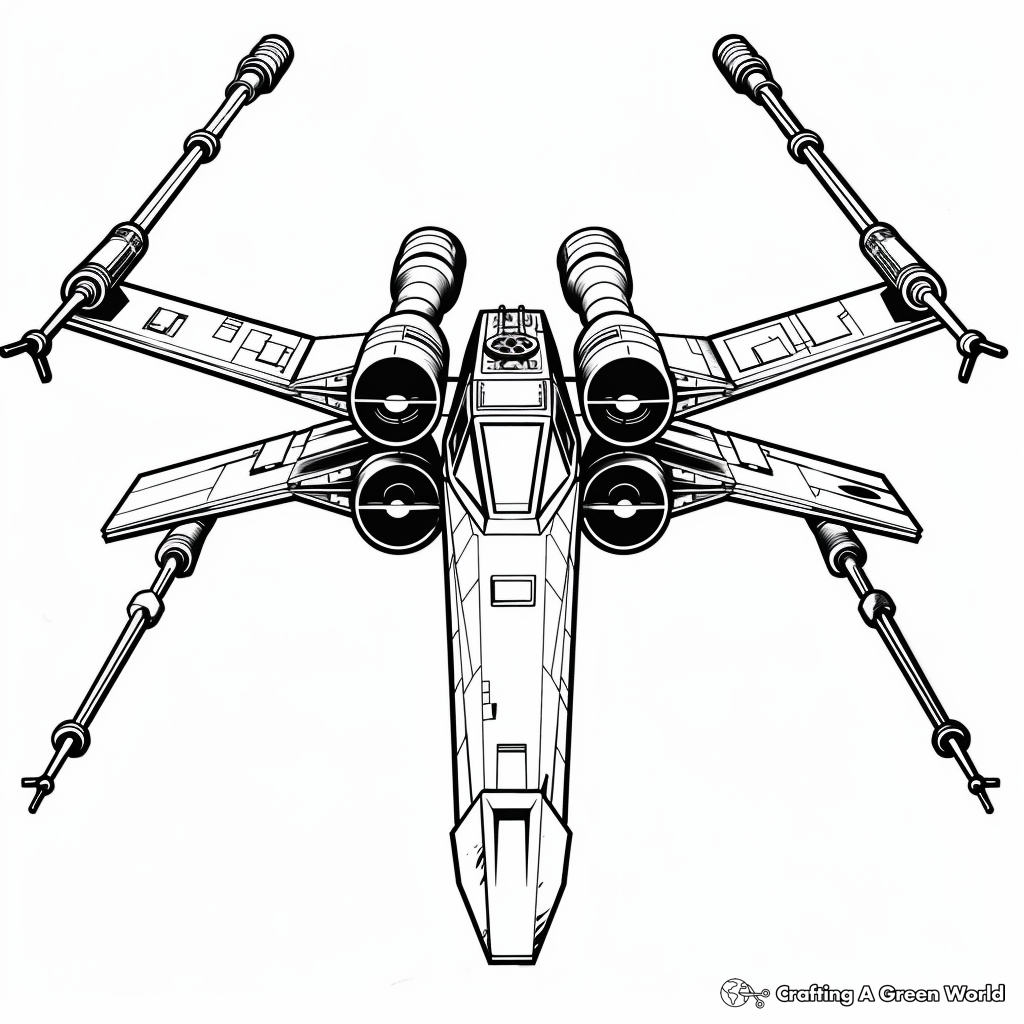
A coloring page x wing provides an engaging thematic resource that transforms recreational art time into targeted fine-motor development for early childhood learners. According to the National Association for the Education of Young Children (NAEYC), intentional manipulation of writing and coloring utensils builds crucial intrinsic hand muscles necessary for lifelong academic success. Integrating these dynamic sci-fi starfighter designs into daily classroom routines leverages popular culture themes to capture sustained student engagement while simultaneously enhancing bilateral coordination, visual-motor integration, and spatial awareness across foundational grade levels. Educators seeking to expand artistic portfolios often explore additional options within the broader Coloring Pages collection.
Curriculum Practice Snapshot:
- Core Focus: Utilizing starfighter-themed graphic templates to refine pencil grip and precision control.
- Target Scope: Preschool through early elementary classrooms and homeschool environments.
- Key Recommendation: Pair large-format outlines with graduated tracing prompts to bridge creative art and structured Handwriting & Tracing exercises.
Core Principles and Detailed Overview
Deliberate fine-motor execution within complex geometric lines requires sustained cognitive attention and precise muscle activation. A coloring page x wing features sharp angles, symmetrical fuselage lines, and intricate engine details that challenge children to adjust wrist pressure and direct small hand movements with pinpoint accuracy. These structural demands move learners beyond random scribbling, encouraging methodical boundary management and controlled hand-eye coordination. Furthermore, pairing thematic visual art with targeted Worksheets reinforces cognitive processing, pattern recognition, and geometric vocabulary in an accessible format.
Key Specifications and Breakdown
| Grade / Developmental Stage | Target Learning Skill | Instructional Strategy & Scaffolding |
|---|---|---|
| Pre-Kindergarten (Ages 3-4) | Palmar-to-pincer grip transition and boundary awareness | Utilize bold, thick-lined starfighter outlines with enlarged structural blocks to accommodate developing grasp patterns. |
| Kindergarten (Ages 5-6) | Precise finger dexterity and directional color shading | Incorporate multi-step color-coding keys to build multi-sensory attention spans and executive function skills. |
| Early Elementary (Ages 7-8) | Symmetrical symmetry control and detailed pressure modulation | Combine complex blueprint schematics with independent writing prompts to merge artistic expression with descriptive vocabulary. |
Systematic fine-motor skill interventions integrated into visual arts improve foundational pencil control and spatial dexterity among early learners — National Center for Education Statistics (NCES)
Step-by-Step Practical Application and Guidelines
Effective classroom execution begins by selecting appropriate image complexity to match the developmental capabilities of the student cohort. First, distribute high-contrast structural outlines and instruct learners to trace the outermost fuselage boundaries with a thick marker before introducing colored pencils for detailed shading. Second, establish structured pacing intervals that encourage hand relaxation breaks to prevent cramping during intricate angular coloring tasks. Third, integrate cross-curricular Learning Activities by asking students to measure the wing spans or count the laser cannons, effectively blending visual arts with mathematical counting and spatial reasoning.
Common Challenges and How to Avoid Them
Hand fatigue and frustration represent the primary obstacles when young children attempt intricate geometric illustrations prematurely. Educators can mitigate frustration by offering graduated design options that progress from broad, simplified silhouettes to advanced multi-layered tactical schematics over several weeks. Discouraging rushed coloring habits through positive reinforcement of boundary precision ensures that learners maintain focus and derive maximum developmental benefit from every instructional session. Providing structured guidance through reliable Teacher Resources further guarantees successful pacing and adaptive differentiation across diverse learner profiles.
💬 Frequently Asked Questions
Explore More Early Learning and Classroom Resources on Knowalla
Supporting comprehensive early childhood development requires a robust repository of engaging printables, structured skill builders, and creative teaching aids. Educators and homeschool parents can discover thousands of high-quality classroom essentials by returning to the main Knowalla hub to access targeted printables designed for every stage of early learning.
Printable Coloring Page Previews