
Introduction
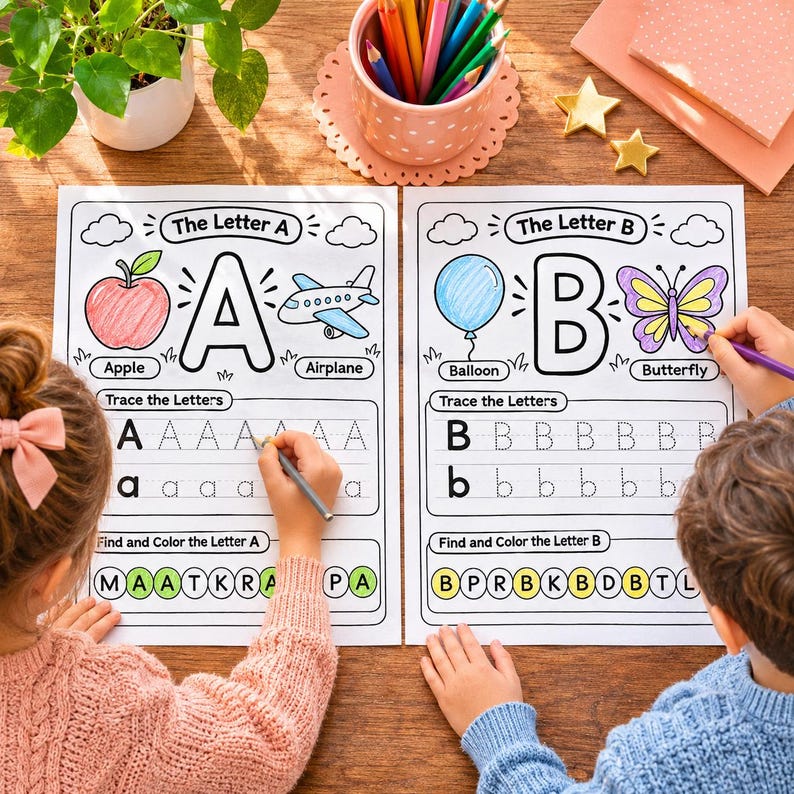
Alphabet coloring and letter recognition worksheets combine targeted visual discrimination tasks with fine-motor skill acquisition to accelerate early literacy development in young children. According to the National Association for the Education of Young Children (NAEYC), purposeful play-based integration of print materials directly supports alphabet knowledge and phonemic awareness in pre-kindergarten curricula. Educators and caregivers rely on structured printables to bridge the gap between abstract graphemes and concrete letter sounds through active engagement. Early childhood classrooms utilizing high-quality Worksheets establish essential foundational competencies required for fluent reading and writing.
Curriculum Practice Snapshot:
- Core Focus: Systematic pairing of visual letter forms with coloring mechanics to reinforce orthographic mapping.
- Target Scope: Pre-K through Grade 1 early childhood learning environments and homeschool settings.
- Key Recommendation: Pair uppercase and lowercase tracking exercises with multisensory verbal prompts during printing sessions.
Core Principles and Detailed Overview
Letter recognition proficiency requires consistent, multimodal exposure to distinct visual symbols alongside phonological instruction. Alphabet coloring and letter recognition worksheets transform passive viewing into active kinesthetic learning by tasking children with tracing outlines, identifying target letters among distractors, and shading specific shapes. This repetitive physical engagement strengthens the neurological pathways responsible for visual memory and graphomotor control. Furthermore, utilizing diverse print materials ensures that learners encounter varied fonts and formats, preventing rigid recognition patterns and promoting true cognitive generalization of the alphabet.
Key Specifications and Breakdown
| Grade / Developmental Stage | Target Learning Skill | Instructional Strategy & Scaffolding |
|---|---|---|
| Pre-Kindergarten (Ages 3-4) | Visual discrimination and basic fine-motor coloring | Focus on large-format single letters with thick borders, pairing each sheet with explicit phonics verbalization. |
| Kindergarten (Ages 5-6) | Uppercase and lowercase matching with stroke formation | Integrate structured handwriting practice alongside Handwriting & Tracing components to build muscle memory. |
| Grade 1 (Ages 6-7) | Consonant-vowel identification and independent orthography | Utilize mixed-letter search tasks supported by creative Learning Activities to test retention. |
Early literacy interventions demonstrate highest efficacy when explicit phonics instruction is combined with fine-motor visual tracking tasks. — What Works Clearinghouse (IES)
Step-by-Step Practical Application and Guidelines
Executing an effective alphabet lesson plan involves a sequential three-step implementation methodology using printable materials. First, introduce the target letter visually and auditorily, demonstrating correct stroke direction on a large display surface before distributing individual pages from Coloring Pages collections. Second, guide learners through the coloring and identification exercise by prompting them to state the letter name and sound aloud while shading designated regions. Third, conclude the session with a reflective review where students point to their completed work and trace the letter form using an index finger to reinforce tactile memory.
Common Challenges and How to Avoid Them
Visual confusion between structurally similar graphemes, such as uppercase ‘B’ and ‘D’ or lowercase ‘b’ and ‘p’, represents the most frequent obstacle in early alphabet instruction. Overcome this hurdle by avoiding simultaneous introduction of mirror-image letters on the same instructional page, instead spacing out similar forms across multiple curriculum units. Additionally, prevent hand fatigue and improper grip formation by selecting worksheets featuring appropriately scaled tracking paths and encouraging frequent rest breaks during coloring tasks.
💬 Frequently Asked Questions
Explore More Early Learning and Classroom Resources on Knowalla
Optimizing early childhood education requires access to reliable, curriculum-aligned printables that engage young minds while reinforcing foundational literacy targets. Explore the complete collection of educational materials, activity sheets, and instructional guides available directly on Knowalla to support comprehensive classroom and homeschool planning.
Printable Coloring Page Previews