

Introduction
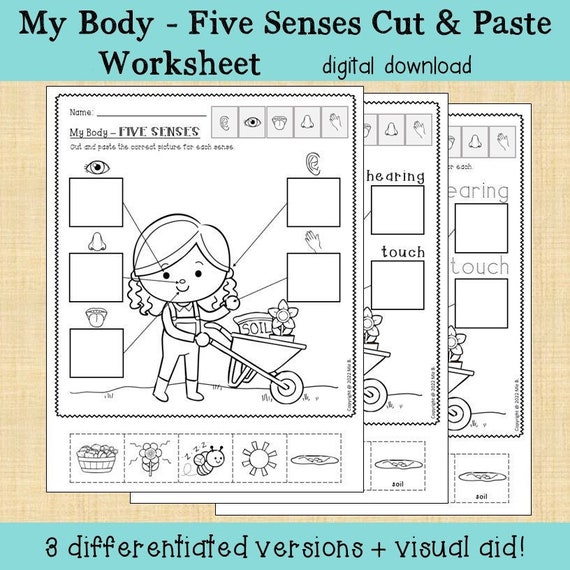
A five senses cut and paste activity worksheet functions as a multisensory instructional tool that combines kindergarten science concepts with foundational fine-motor skill practice. According to the National Association for the Education of Young Children (NAEYC), hands-on manipulative tasks directly strengthen bilateral coordination, spatial awareness, and cognitive categorization in early childhood learners. By physically manipulating tactile cards and sorting illustrations into categories corresponding to sight, hearing, smell, taste, and touch, young students bridge abstract sensory concepts with concrete physical actions. Early childhood educators and homeschool parents rely on these structured printables to assess biological science comprehension while simultaneously developing critical scissor control and pincer grasp strength. Integrating these foundational Worksheets into daily learning centers provides an engaging, low-preparation method for reinforcing scientific inquiry. Additional enrichment can be achieved by pairing sorting tasks with related Coloring Pages to sustain engagement across multidisciplinary learning blocks.
Curriculum Practice Snapshot:
- Core Focus: Kinesthetic sorting of everyday objects into biological sensory categories using scissor and adhesive skills.
- Target Scope: Pre-K through first grade classrooms, special education intervention, and home-school environments.
- Key Recommendation: Pair cutting exercises with guided verbal discussions to connect physical actions with scientific vocabulary.
Core Principles and Detailed Overview
Sensory integration theory dictates that young children learn most effectively when cognitive processing is paired with direct physical manipulation of educational materials. A properly designed five senses cut and paste activity worksheet requires students to examine specific pictorial representations—such as a ringing bell, a fragrant flower, or a rough rock—and independently determine which anatomical organ processes that stimulus. This dual-task requirement engages both the visual cortex and the motor planning centers of the brain, leading to deeper memory retention. Furthermore, systematic cutting and pasting practice builds the intrinsic hand muscles required for subsequent academic milestones, such as handwriting and technical drawing. Educators frequently integrate these printables alongside Handwriting & Tracing exercises to ensure balanced development of both gross cognitive frameworks and fine motor precision.
Key Specifications and Breakdown
| Grade / Developmental Stage | Target Learning Skill | Instructional Strategy & Scaffolding |
|---|---|---|
| Preschool (Ages 3-4) | Basic sensory identification and loop-scissor practice | Use thick boundary lines and provide pre-cut strips to isolate cutting tasks. |
| Kindergarten (Ages 5-6) | Anatomical matching and independent cutting | Require verbal justification for sorting choices before final gluing. |
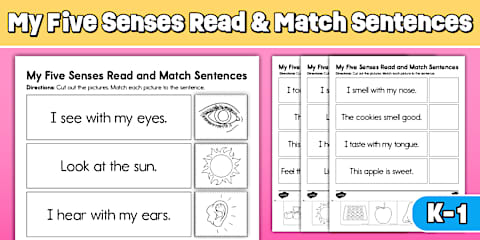
| First Grade (Ages 6-7) | Complex stimulus categorization and label writing | Incorporate written sentence prompts alongside cut images for extended literacy. |
Systematic multisensory practice combined with tactile manipulation significantly accelerates early conceptual retention and fine motor dexterity in primary learners — What Works Clearinghouse (IES)
Worksheet Previews & Reference Materials






Step-by-Step Practical Application and Guidelines
Implementing a sensory sorting worksheet effectively requires a methodical three-phase instructional sequence to maximize both safety and academic comprehension. First, educators distribute the printable sheets and guide children through a preliminary observation phase, asking learners to name each picture card aloud and identify the associated body part. Second, students execute the fine-motor phase by carefully cutting along designated dotted boundary lines using age-appropriate safety scissors, practicing proper thumb-up grip mechanics. Third, learners complete the cognitive sorting phase by arranging and gluing each cropped image into the correct sensory column on the primary template. This structured progression ensures that mechanical cutting tasks do not overshadow the core biological objective, maintaining a healthy balance between art execution and science inquiry.
Common Challenges and How to Avoid Them
Frustration with scissor mechanics and ambiguous picture categorization represent the two primary hurdles encountered during sensory sorting exercises. Educators can mitigate cutting anxiety by utilizing thicker paper stock or pre-cutting worksheets into manageable component strips, allowing emerging cutters to focus on shorter, successful lines. To resolve confusion over ambiguous illustrations—such as a hot bowl of soup representing both sight and taste—teachers should facilitate a brief whole-group discussion before independent work begins, establishing clear context for each picture card. Providing structured Teacher Resources and differentiated sorting mats ensures that every developmental tier within the classroom experiences achievable success.
