Introduction
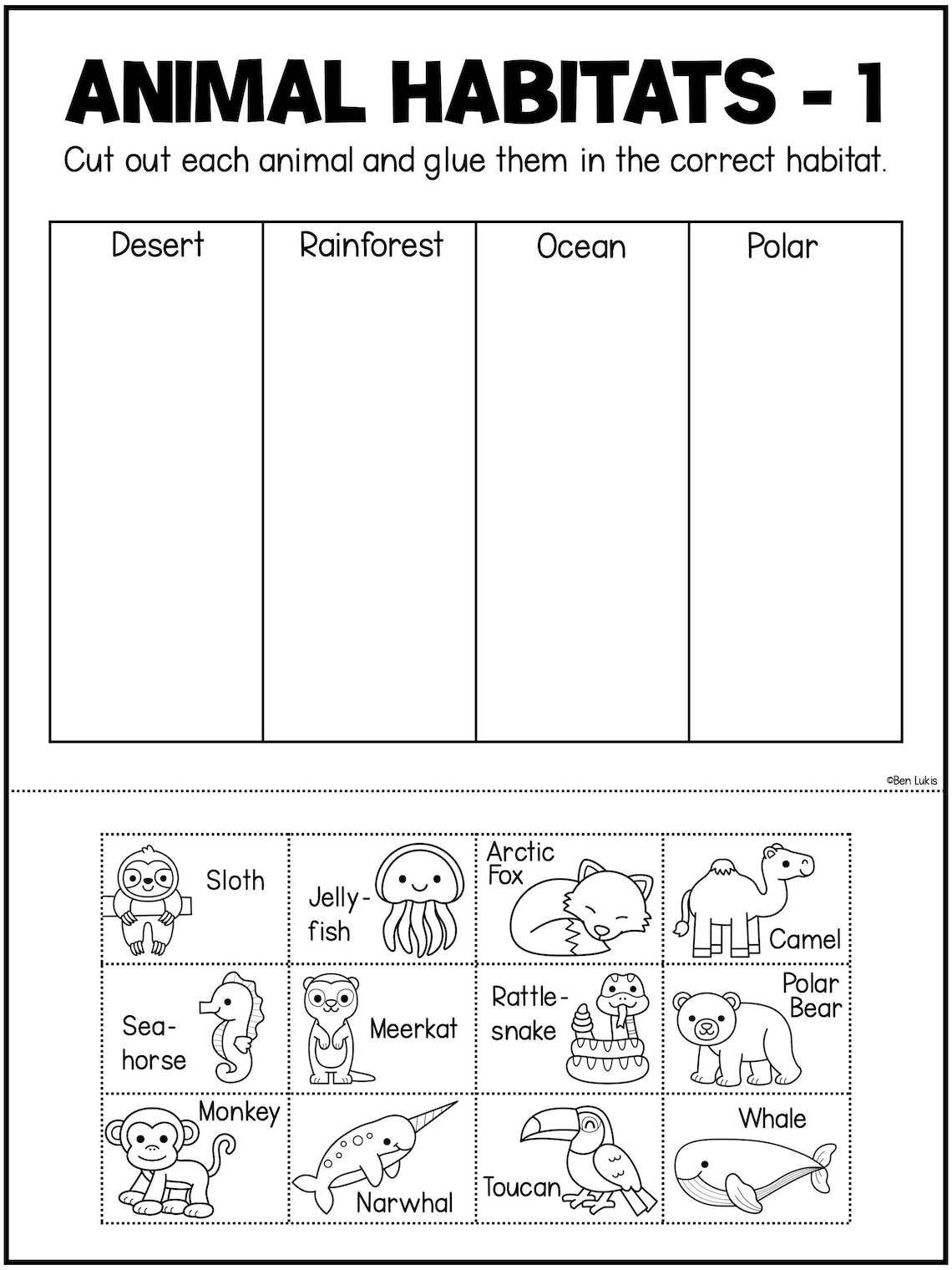
Animal habitats coloring and matching worksheets represent structured educational printables that combine ecological science concepts with fine-motor skill acquisition for early childhood learners. According to the National Association for the Education of Young Children (NAEYC), hands-on manipulative tasks combined with visual arts heavily support cognitive retention and motor planning in early childhood classrooms. These resources establish foundational knowledge regarding ecosystems while simultaneously building pencil control, spatial awareness, and cognitive categorization skills. Utilizing targeted Worksheets allows educators to bridge abstract biological concepts into tangible, hands-on learning moments that resonate with young students in both home and school environments.
Curriculum Practice Snapshot:
- Core Focus: Bridging environmental science knowledge with fine-motor pencil control through themed printables.
- Target Scope: Pre-K through Grade 2 early childhood education and primary homeschool environments.
- Key Recommendation: Pair matching tasks with thematic Coloring Pages to reinforce bilateral hand coordination and visual discrimination.
Core Principles and Detailed Overview
Environmental science mastery begins with understanding where living organisms thrive and why specific adaptations suit particular environments. Animal habitats coloring and matching worksheets facilitate this understanding by asking learners to connect distinct species, such as polar bears or cactus wrens, to their respective biomes like the Arctic tundra or the Sonoran desert. This approach leverages visual-spatial intelligence, allowing children to encode ecological relationships through active participation rather than passive observation. When educators integrate structured Learning Activities alongside these printables, students build broader analytical competencies that extend well beyond basic zoology.
Key Specifications and Breakdown
| Grade / Developmental Stage | Target Learning Skill | Instructional Strategy & Scaffolding |
|---|---|---|
| Pre-Kindergarten (Ages 3-4) | Color identification and gross motor crayon grip | Utilize large-format outlines with bold connecting lines and minimal visual clutter. |
| Kindergarten (Ages 5-6) | Ecosystem categorization and direct line-matching | Introduce habitat labels paired with picture icons for guided decoding practice. |
| Early Elementary (Grades 1-2) | Analytical sorting and written vocabulary association | Require independent classification of multi-layered environments alongside detailed Handwriting & Tracing prompts. |
Explicit instruction in foundational science and visual-motor integration yields significant gains in early elementary cognitive retention and fine-motor precision — What Works Clearinghouse (IES)
Step-by-Step Practical Application and Guidelines
Implementing animal habitats coloring and matching worksheets successfully requires a three-phase instructional sequence that moves from direct observation to independent synthesis. The first step involves introducing target vocabulary through real-world imagery or read-aloud books to establish a baseline schema for environments like oceans, forests, and grasslands. The second step transitions students to the printable resource, where educators guide learners through coloring the specific animal illustrations before executing the matching lines. The final step involves a peer-to-peer or student-to-teacher review discussion, prompting children to articulate the reasoning behind why a specific animal belongs in a designated ecosystem.
Common Challenges and How to Avoid Them
Visual overload and ambiguous iconography represent the primary obstacles when young learners interact with multi-concept science printables. Educators can prevent cognitive fatigue by selecting pages that limit the number of matching pairs per sheet to a maximum of four or five items for younger age brackets. Furthermore, pairing these visual matching tasks with comprehensive Teacher Resources ensures that instructional pacing aligns with developmental readiness, preventing frustration and supporting positive engagement.
💬 Frequently Asked Questions
Explore More Early Learning and Classroom Resources on Knowalla
Designing a comprehensive, engaging curriculum requires access to dependable, high-quality printables that cater to diverse developmental milestones. Knowalla provides an extensive library of professional educational assets tailored specifically for primary classrooms and homeschool environments. Educators and parents can discover endless inspiration, skill-building printables, and structured lesson supports across every core subject area to keep young learners motivated and challenged.
Printable Coloring Page Previews