Introduction
Coloring pages hot wheels represent printable developmental assets featuring iconic racing vehicles designed to bridge high-interest thematic motivation with foundational fine-motor skill acquisition. According to the National Association for the Education of Young Children (NAEYC), purposeful play and engaging visual stimuli significantly enhance sustained attention spans during early childhood skill practice. Integrating automobile-themed graphics transforms standard pencil control exercises into captivating sensory-motor experiences. Educators and homeschool instructors frequently leverage these printable resources to capture reluctant learners’ interest while targeting essential hand-muscle endurance. Exploring targeted Coloring Pages offers educators a direct mechanism to combine recreational motifs with rigorous pre-writing preparation. Children naturally gravitate toward dynamic automotive imagery, making these specialized sheets an efficient instructional tool for foundational coordination.
Curriculum Practice Snapshot:
- Core Focus: Utilizing themed automotive line art to build fine-motor control, bilateral hand coordination, and spatial boundary adherence.
- Target Scope: Early childhood education settings, pre-school classrooms, kindergarten centers, and homeschool primary environments.
- Key Recommendation: Pair thick contour lines with targeted Worksheets to transition children smoothly from unstructured coloring to precise handwriting strokes.
Core Principles and Detailed Overview
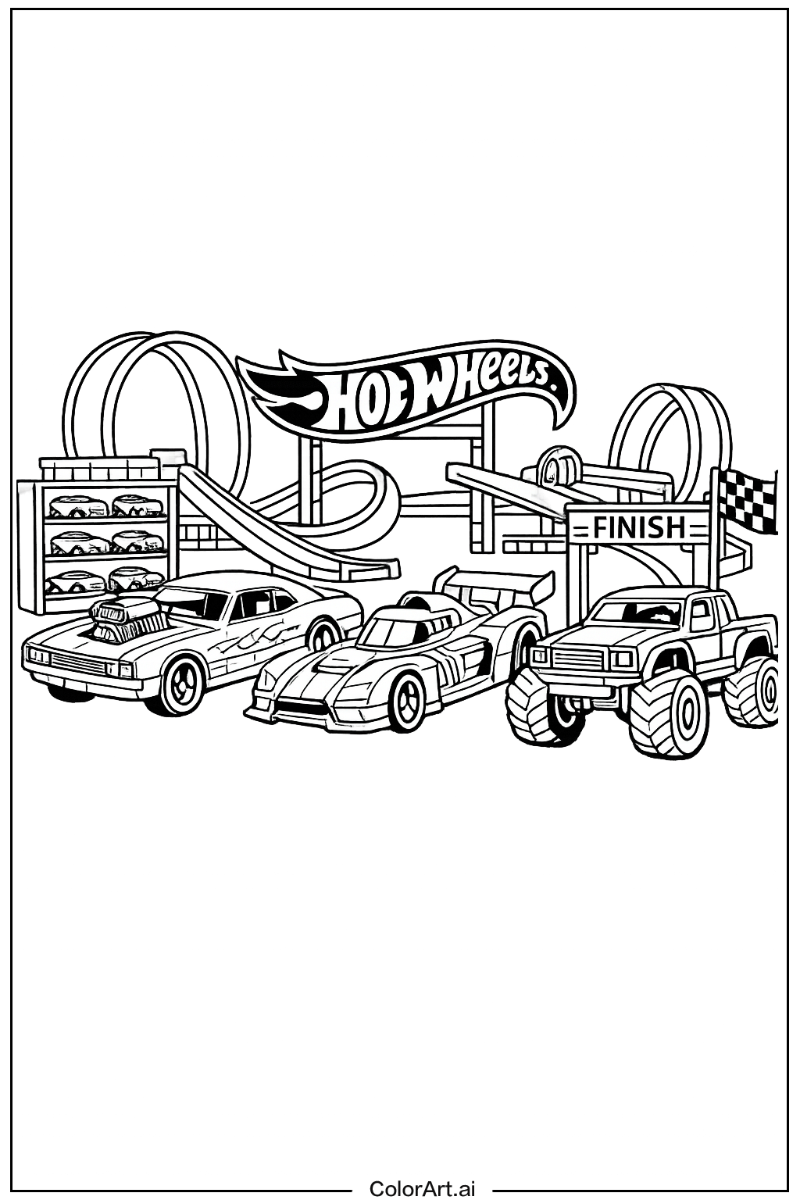
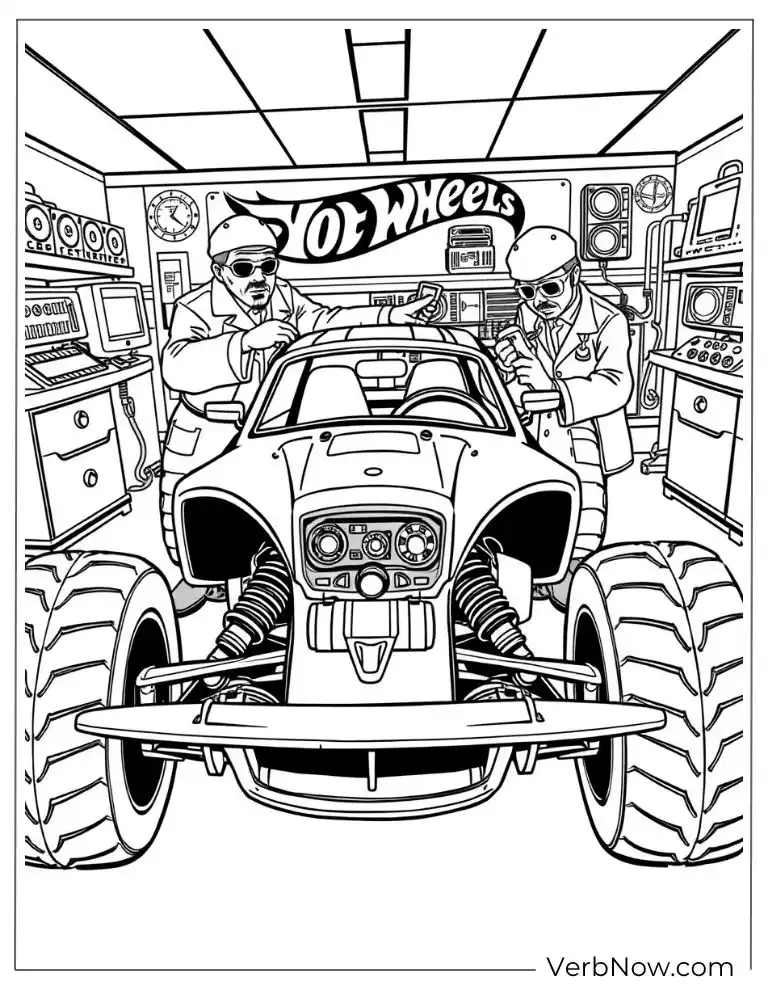
Fine-motor development relies heavily on repetitive grip strengthening, visual-motor integration, and directional control, all of which are systematically reinforced through structured automotive art activities. Direct engagement with vehicle outlines demands precise wrist rotation and finger adjustments as learners navigate intricate track layouts, aerodynamic spoilers, and oversized monster truck wheels. When children concentrate on maintaining wax crayons or colored pencils within narrow borders, neural pathways governing hand-eye coordination strengthen measurably. Furthermore, integrating Handwriting & Tracing components directly onto these vehicle-themed printables allows instructors to connect kinetic coloring motions with letter formation and curved line tracking. Pedagogical research consistently demonstrates that high-interest subject matter drastically reduces frustration levels during repetitive skill-building tasks, yielding superior cognitive retention and task completion rates.
Key Specifications and Breakdown
| Grade / Developmental Stage | Target Learning Skill | Instructional Strategy & Scaffolding |
|---|---|---|
| Pre-K (Ages 3-4) | Palmar grasp transition and gross boundary awareness | Utilize ultra-thick borders with oversized vehicle shapes and chunky writing utensils. |
| Kindergarten (Ages 5-6) | Pincer grasp refinement and directional stroke control | Incorporate multi-step color-by-number templates featuring racing cars and tracks. |
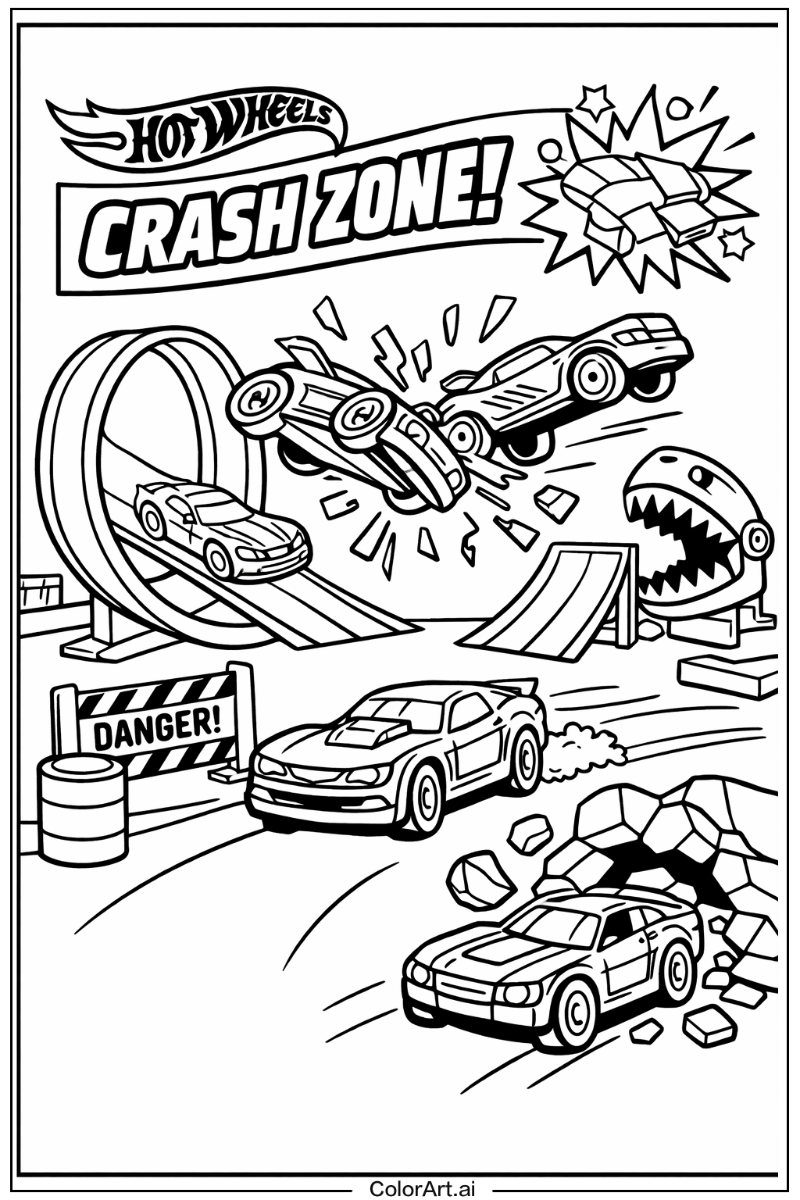
| Early Elementary (Ages 6-7) | Complex spatial reasoning and intricate detail precision | Provide dynamic stunt-track layouts combined with descriptive writing prompts. |
Fine-motor competency and visual-motor integration serve as critical early predictors of subsequent academic writing proficiency and spatial reasoning development — What Works Clearinghouse (IES)
Step-by-Step Practical Application and Guidelines
Implementing automotive-themed art sheets effectively requires a structured, three-phase pedagogical sequence designed to maximize both engagement and physical skill development. First, educators select printables matching the exact developmental motor stage of the learners, ensuring line weights and design complexities align with current pencil-grip capabilities. Second, instructors introduce specific color-coding parameters or directional shading rules to transition the activity from passive coloring to active cognitive problem-solving. Third, practitioners facilitate collaborative sharing sessions where children describe their custom-designed racing vehicles orally, integrating essential language arts standards with creative arts. Supplementing these sessions with structured Learning Activities ensures holistic cognitive development across multiple curriculum domains simultaneously.
Common Challenges and How to Avoid Them
Over-reliance on complex vehicle graphics without adequate skill scaffolding often leads to hand fatigue, frustration, and eventual task abandonment among young learners. Instructors frequently err by presenting highly intricate, photorealistic car schematics to children who have not yet mastered basic geometric shape containment. Mitigate this challenge by grading print complexity carefully, starting with bold, simplified cartoon race cars before progressing toward detailed stunt tracks and mechanical close-ups. Additionally, addressing improper pencil grips early prevents long-term muscle strain; educators should utilize ergonomic triangular crayons or specialized grip attachments whenever children display clenched or fisted writing postures.
💬 Frequently Asked Questions
Explore More Early Learning and Classroom Resources on Knowalla
Discovering comprehensive educational materials designed for modern classrooms and homeschool environments requires reliable, structured pedagogical platforms. Knowalla provides an extensive repository of high-value printables, structured lesson plans, and targeted Teacher Resources engineered to support early childhood development. Educators and parents can seamlessly browse categorized worksheets, handwriting guides, and creative activities tailored to engage young learners effectively.
Printable Coloring Page Previews