Introduction
Coloring pages houses serve as structured visual templates that enhance early childhood developmental milestones by combining spatial geometry recognition with fine-motor precision exercises. According to the National Association for the Education of Young Children (NAEYC), intentional art and coloring activities scaffold foundational pre-writing proficiencies by strengthening intrinsic hand muscles and bilateral coordination. Educators utilize these architectural worksheets across preschool and kindergarten Worksheets collections to build pencil grip stamina while simultaneously encouraging thematic vocabulary acquisition centered around community, shelter, and basic shapes.
Curriculum Practice Snapshot:
- Core Focus: Utilizing architectural line art to advance fine-motor control and geometric shape identification.
- Target Scope: Early childhood classrooms, special education intervention groups, and homeschool environments.
- Key Recommendation: Pair structured house illustration sheets with multi-sensory tracing and spatial mapping Learning Activities to deepen conceptual mastery.
Core Principles and Detailed Overview
Architectural coloring layouts provide a familiar visual schema that naturally bridges abstract mathematical concepts with concrete environmental recognition. Children encounter triangles, rectangles, squares, and lines within the context of a house, which reinforces geometric awareness without cognitive overload. Integrating these visual sheets into daily Coloring Pages centers supports visual-spatial processing, figure-ground discrimination, and color-boundary adherence. Furthermore, structured thematic prompts encourage young learners to articulate positional language—such as above, beside, and underneath—when discussing doors, windows, chimneys, and roofs.
Key Specifications and Breakdown
| Grade / Developmental Stage | Target Learning Skill | Instructional Strategy & Scaffolding |
|---|---|---|
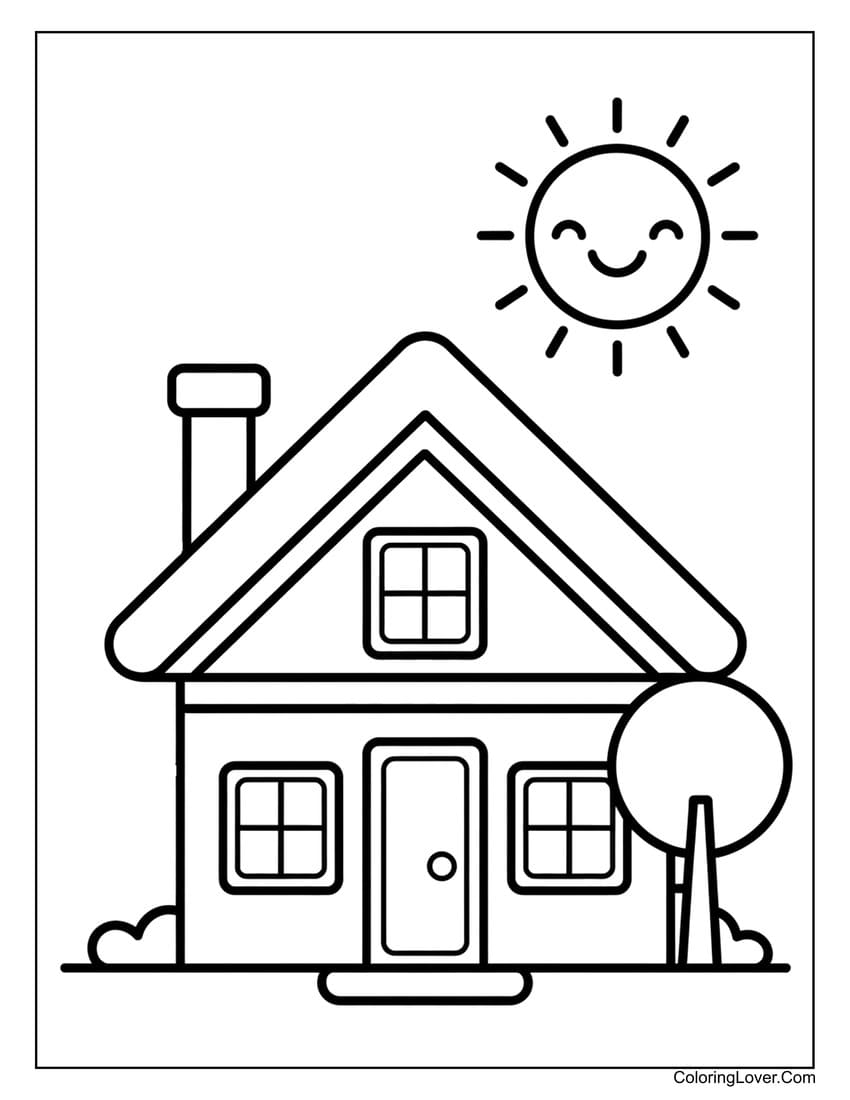
| Pre-K (Ages 3-4) | Gross boundary containment and palmar grasp progression | Provide thick-lined, simplified cottage outlines paired with chunk crayons. |
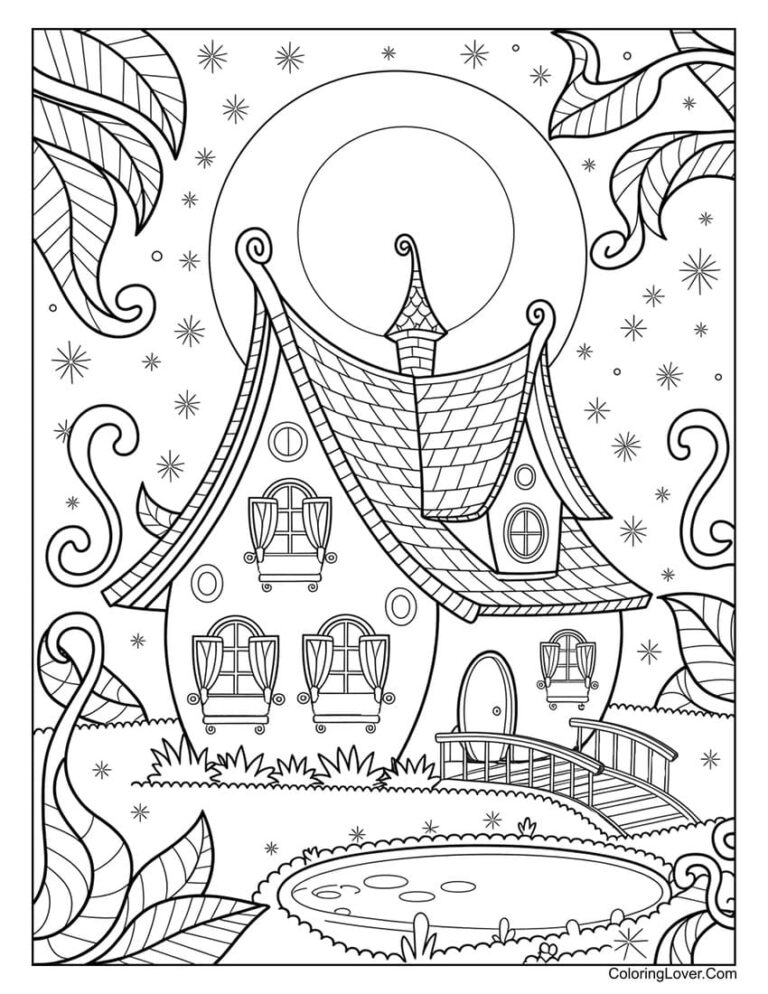
| Kindergarten (Ages 5-6) | Pincer grasp refinement and geometric shape identification | Utilize detailed suburban home layouts with explicit instruction on coloring directional patterns. |
| 1st Grade (Ages 6-7) | Spatial orientation, perspective introduction, and architectural vocabulary | Combine complex multi-story house sheets with label-tracing Handwriting & Tracing modules. |
Structured fine-motor interventions and visual arts integration significantly enhance foundational pre-handwriting stamina and spatial working memory among early primary learners — What Works Clearinghouse (IES)
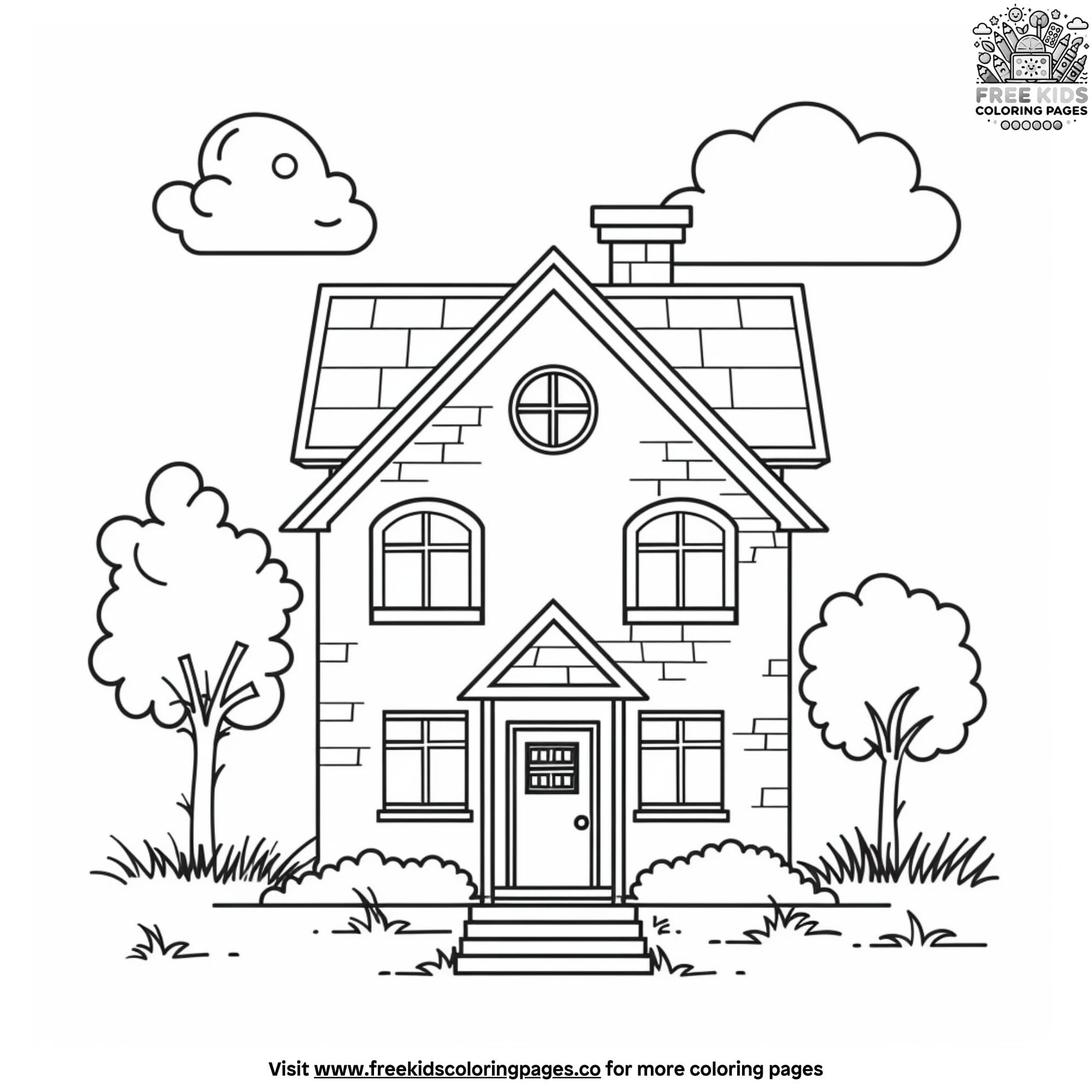
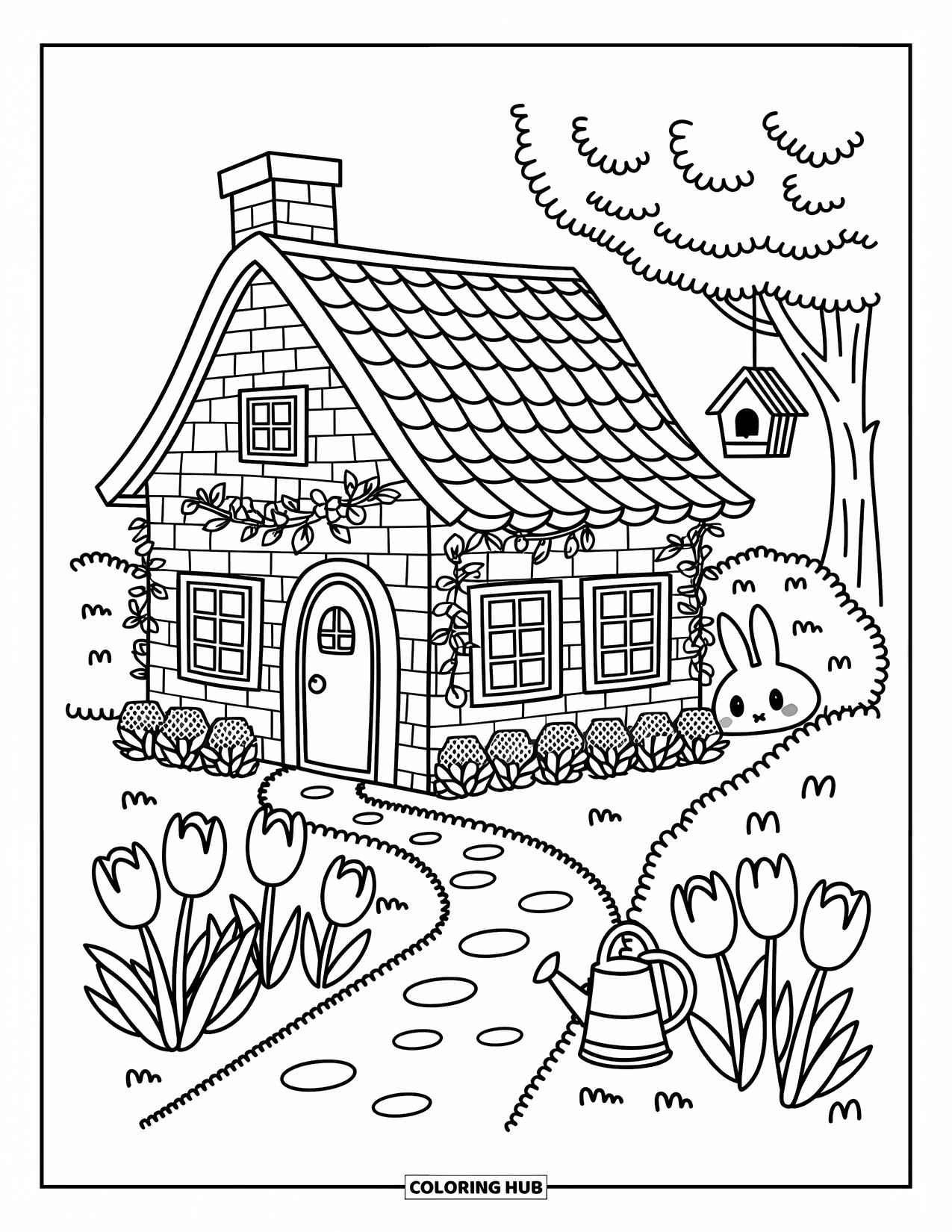
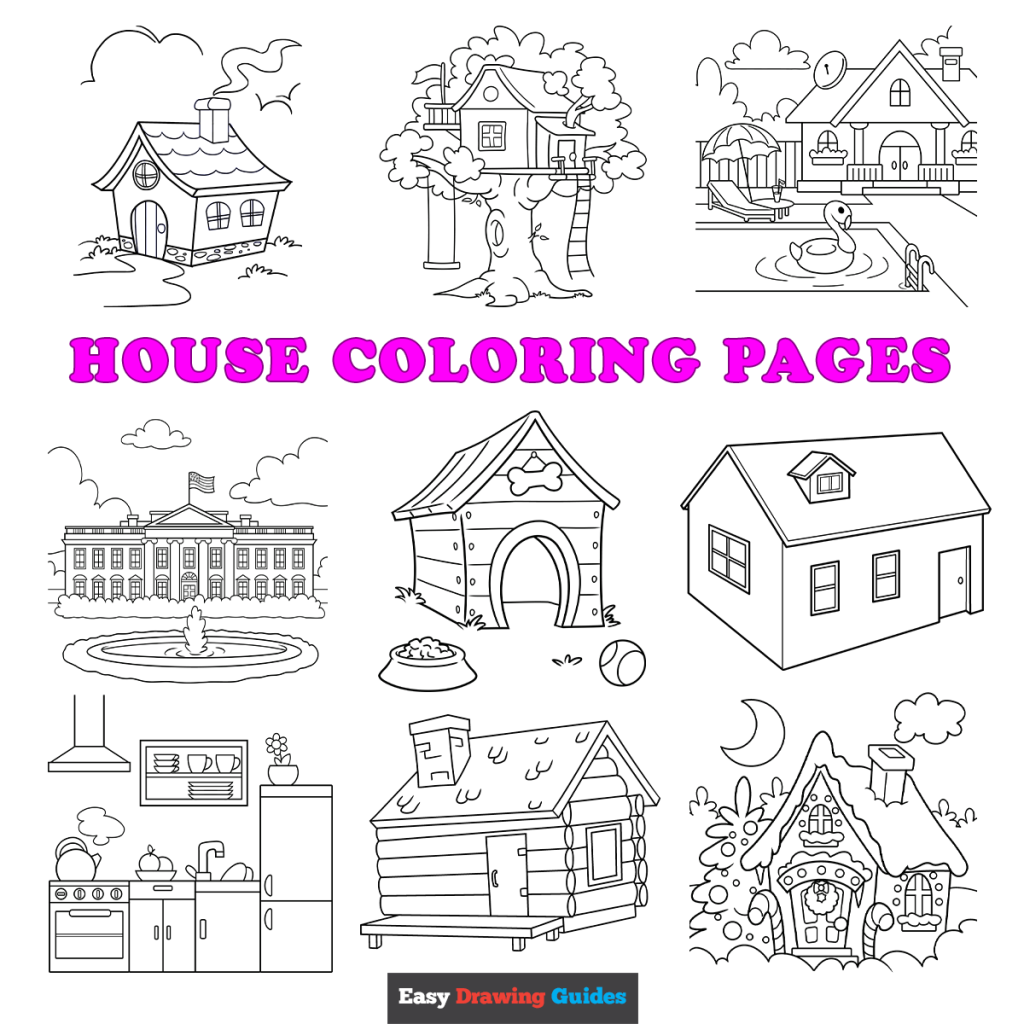
Printable Coloring Page Previews




Step-by-Step Practical Application and Guidelines
Implementing architectural coloring tasks effectively requires a three-step instructional sequence that moves from tactile exploration to independent execution. First, educators introduce the specific geometric shapes embedded within the house layout, prompting learners to trace roofs and walls with an index finger before introducing any writing utensils. Second, instructors establish clear motor expectations by modeling slow, controlled strokes that adhere strictly to interior boundaries, drawing upon Teacher Resources for explicit modeling scripts. Third, students execute the coloring sheet independently while practitioners circulate the learning environment, offering targeted feedback regarding grip adjustments, wrist positioning, and directional shading.
Common Challenges and How to Avoid Them
Frustration during architectural coloring tasks typically