Introduction
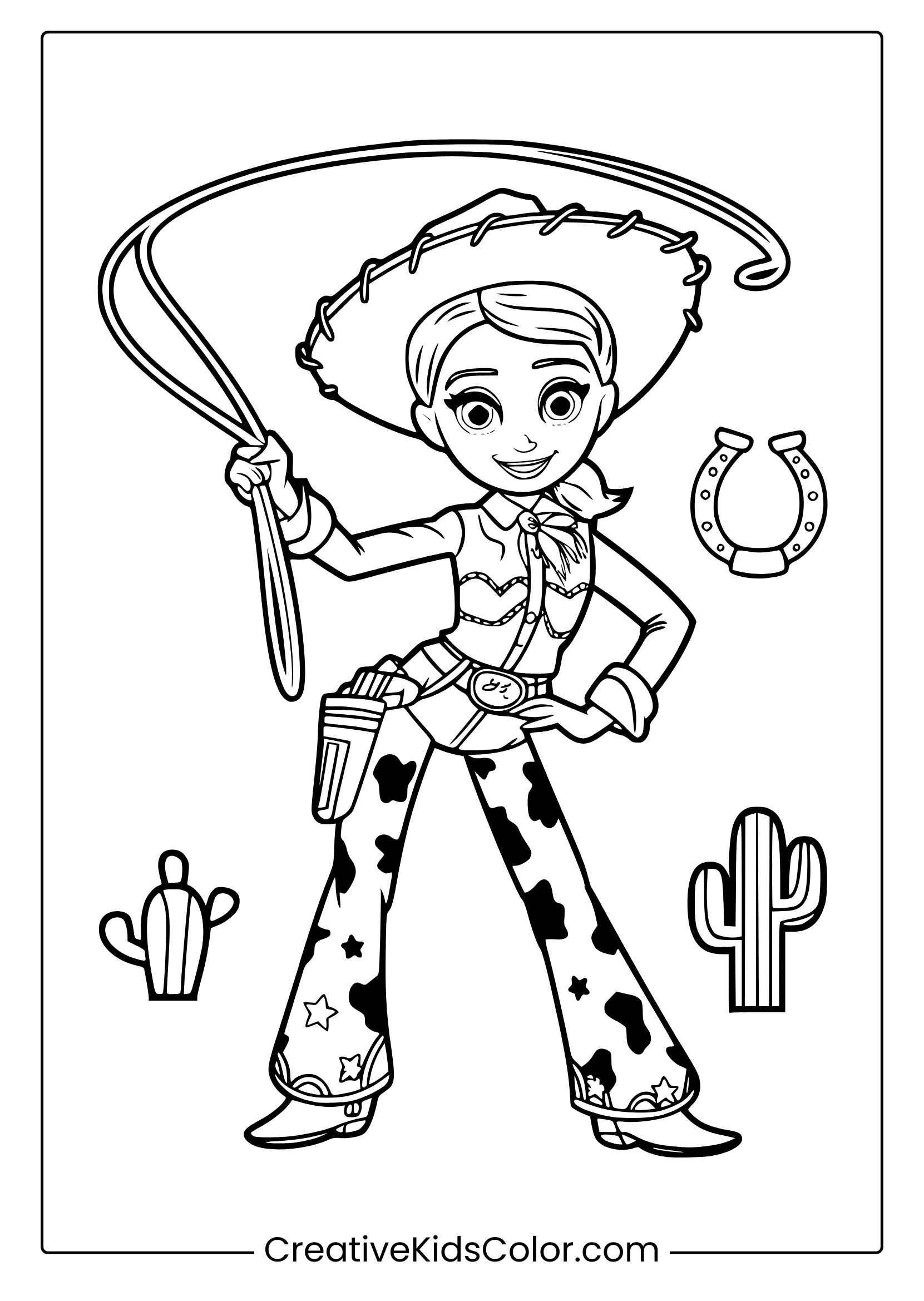
Coloring pages jessie toy story serve as targeted visual-motor integration resources that combine familiar animated character engagement with foundational early childhood skill acquisition. According to the National Association for the Education of Young Children (NAEYC), intentional play-based media integration supports sustained attention spans and deepens cognitive engagement during early writing skill practice. Educators and homeschool parents leverage these character-themed printable sheets to transform passive screen exposure into active, hands-on motor planning tasks. By engaging with detailed line art featuring the popular cowgirl figure, young learners strengthen intrinsic hand muscles while maintaining high motivational drive. Integrating such thematic assets into daily lesson planning provides an accessible entry point for differentiated instruction, accommodating diverse developmental timelines within inclusive learning environments.
Curriculum Practice Snapshot:
- Core Focus: Enhancing fine-motor control, pencil grasp, and spatial awareness using themed character line art.
- Target Scope: Early childhood through lower elementary students (Pre-K to Grade 2) in classrooms and homeschools.
- Key Recommendation: Pair coloring tasks with targeted Handwriting & Tracing sheets to reinforce wrist stabilization and letter formation.
Core Principles and Detailed Overview
Targeted character illustrations bridge the gap between creative expression and structured academic preparation by utilizing familiar visual cues to encourage sustained focus. Coloring pages jessie toy story provide specific spatial boundaries—such as the character’s hat, boots, and braided hair—that demand deliberate hand-eye coordination and visual-spatial judgment. When children navigate intricate borders, the brain continuously calculates pressure, direction, and speed, mirroring the neural demands required for fluent handwriting. Structured Worksheets featuring these designs allow instructors to assess grip strength, endurance, and bilateral coordination without introducing anxiety-inducing formal testing. Furthermore, incorporating recognizable pop-culture figures reduces initial resistance in reluctant learners, fostering a positive emotional association with pencil-and-paper tasks.
Key Specifications and Breakdown
| Grade / Developmental Stage | Target Learning Skill | Instructional Strategy & Scaffolding |
|---|---|---|
| Pre-Kindergarten (Ages 3-4) | Palmar-to-digital grip transition and large area boundary control. | Provide ultra-thick outline sheets with broad color zones and jumbo crayons. |
| Kindergarten (Ages 5-6) | Tripod grasp reinforcement and directional wrist movement. | Utilize detailed hat and boot sections paired with guided Coloring Pages. |
| First Grade (Ages 6-7) | Complex spatial planning, shading pressure control, and stamina. | Incorporate multi-element character backgrounds alongside descriptive Teacher Resources. |
Foundational Motor Integration Principle — National Center for Education Statistics (NCES)
Step-by-Step Practical Application and Guidelines
Executing an effective character-themed fine-motor session requires careful material preparation and explicit modeling of proper grip mechanics. First, select appropriate printouts matching the developmental fine-motor tier of the student group, ensuring line weights accommodate current visual tracking abilities. Second, introduce the activity by demonstrating efficient tripod or quadrupod pencil grasps, deliberately verbalizing how to stabilize the paper with the non-dominant hand. Third, transition the completed visual art into broader Learning Activities by prompting children to narrate a short story about the illustrated scene, reinforcing both expressive language and sequencing skills.
Common Challenges and How to Avoid Them
Hand fatigue and early frustration represent the most frequent obstacles encountered during detailed coloring and tracing exercises. Children frequently press down excessively hard with writing utensils, leading to rapid muscle exhaustion and crumpled paper. Educators counteract this challenge by introducing graduated resistance tools, such as soft graphite pencils, flexible colored pencils, or ergonomic triangular grips, which naturally promote relaxed finger positioning. Additionally, structuring short, timed intervals rather than demanding unbroken sustained attention prevents cognitive overload and maintains enthusiasm throughout the instructional period.
💬 Frequently Asked Questions
Explore More Early Learning and Classroom Resources on Knowalla
Discover comprehensive collections of printable educational assets, curated skill-building worksheets, and teacher guides designed to elevate early childhood instruction by visiting Knowalla today.
Printable Coloring Page Previews